I design, develop and operate IT systems
as simply, reliably and cost-effectively as possible

Skills
Systems & Infrastructure
Linux · Networking · MikroTik ROS · WireGuard · Proxmox · Docker / Compose · Cloud services and Support (AWS / Azure)
Software
React · MUI · PocketBase · JavaScript/TypeScript · NodeJS · ExpressJS · Go
Operations
Prometheus · Grafana · Alertmanager · OTLP · Authentik - SSO · BorgBackup
Cloud
AWS SES / Azure ACS (ECS) · S3 · EC2 / Azure Virtual Machines · CloudFront · Route 53 / Azure DNS · Virtual Networking · Cloudflare DNS / Proxy
About me
My name is Lajos Mikula; I am currently years old and an undergraduate student. IT is my life: in my spare time – when I’m not doing sport (running or hiking) – I spend my time programming and doing system design, or deepening my knowledge of Linux or the world of networking.
Alongside my studies, I try to gain some work experience: I actively support the work of several non-profit organisations (e.g. MHVISZ or AGRYA), mainly by maintaining their IT systems, but sometimes also by developing bespoke software solutions.
References
What have I done so far, why, and what were the results?
Throughout my career, I have supported the work of civil society organisations on numerous occasions through my software and expertise. Here are a few references:
- VidékVibe – event management software for a video competition (managing team registrations, telephone verification, checking video formats, followed by a public vote)
- Ok: In the case of a large-scale video competition, it is difficult (and time-consuming) to check all uploaded videos and entries, even though this could easily be automated.
- Impact: In some cases, teams taking part in the competition were able to complete the registration process entirely independently, thereby reducing the workload on our staff.
- Cross-page, accurate (and anonymous) thumbprinting (built on Thumbmark JS, using our own indicators)
- Reason: With so many web pages, it was impossible to track users, making it harder to understand the user flow.
- Impact: we gained a more accurate picture of how users moved between web pages and of the effectiveness of individual campaigns.
- Event registration and customer relationship management system (event registration, applicant management, tracking applicants throughout events)
- Reason: An old Drupal event management module needed to be replaced with a modern, easily extensible alternative.
- Impact: the registration process was speeded up, and our staff’s workload was reduced.
- I have also built numerous websites using a mixed tech stack (including single-page applications, though the majority of the sites are WordPress-based)
- Reason: Replacement of old Drupal 8 websites.
- Impact: A faster, smoother web experience.
- I streamlined the organisation’s IT infrastructure (auditing and optimising cloud services on AWS)
- Reason: High AWS bill.
- Impact: I identified several CloudFront distribution points and associated S3 buckets left over from previous developments; deleting these significantly reduced the bill.
- I made the organisation’s operations more secure by introducing a centralised SSO service
- Reason: every user had their own account for each website, which posed a security risk (password reuse) and was also inconvenient.
- Impact: convenient and secure login.
- As part of the Microsoft Nonprofit Programme, I migrated certain parts of the organisation’s infrastructure to the Microsoft Azure cloud service.
- Reason: a new, free option for non-profits.
- Impact: the monthly cloud costs for the infrastructure in question have been reduced to 0 Ft.
Computer Science
I’m interested in everything to do with computers, but – like everyone else – I have my favourite topics and areas that I’d like to explore in more depth later on (and which I’m currently working on). I’m constantly trying to improve my skills in these areas, and the following projects have emerged as a result:
- Servers and physical infrastructure: this site is also running on one of my own servers (currently a Lenovo m93p Tiny), but I’ve also used Fujitsu mini PCs in my home lab (S920) During my work with civil society organisations, we also organised certain events using physical servers, so this knowledge came in very handy.
- Linux: modern IT systems would be nowhere without Linux, so I considered learning Linux to be essential. Today, I work confidently with Debian-based systems. I have also learnt Bash and other tools essential for system administration. I’m currently experimenting with Nix.
- Virtualisation using Proxmox VE: I migrated old Drupal 8 sites to physical hardware to reduce costs; this was the first time I used Proxmox, a virtualisation platform based on QEMU. I also worked on clustering.
- Networking, Zero Trust: whilst setting up secure communication between office servers and creating offsite backups, I discovered Tailscale and the underlying WireGuard. I am now confident in setting up even more complex mesh topologies that can continue to function even in the event of minor faults.
- MikroTik and RouterOS: RouterOS offers a wide range of customisation options, which piqued my interest. I am now confident in configuring even complex office networks using RoMON and CapsMan.
- Web development: I have been developing web applications since the very beginning. I am now well versed in the world of React and MUI, and for the backend I most often use a version of PocketBase that I have customised to my own requirements. I have also experimented with distributed SQLite-based solutions.
- Observability: Good programming alone, however, is not enough. Something unexpected can always happen that the programmer hasn’t anticipated. To prevent such surprises, I’ve immersed myself in the world of OTLP, Prometheus and Grafana; now, all the websites I manage are monitored by these tools 24 hours a day, and in the event of a fault, I’m notified via Alertmanager and can begin troubleshooting as soon as possible. To check website availability, I use the Hungarian-developed Kuvasz.
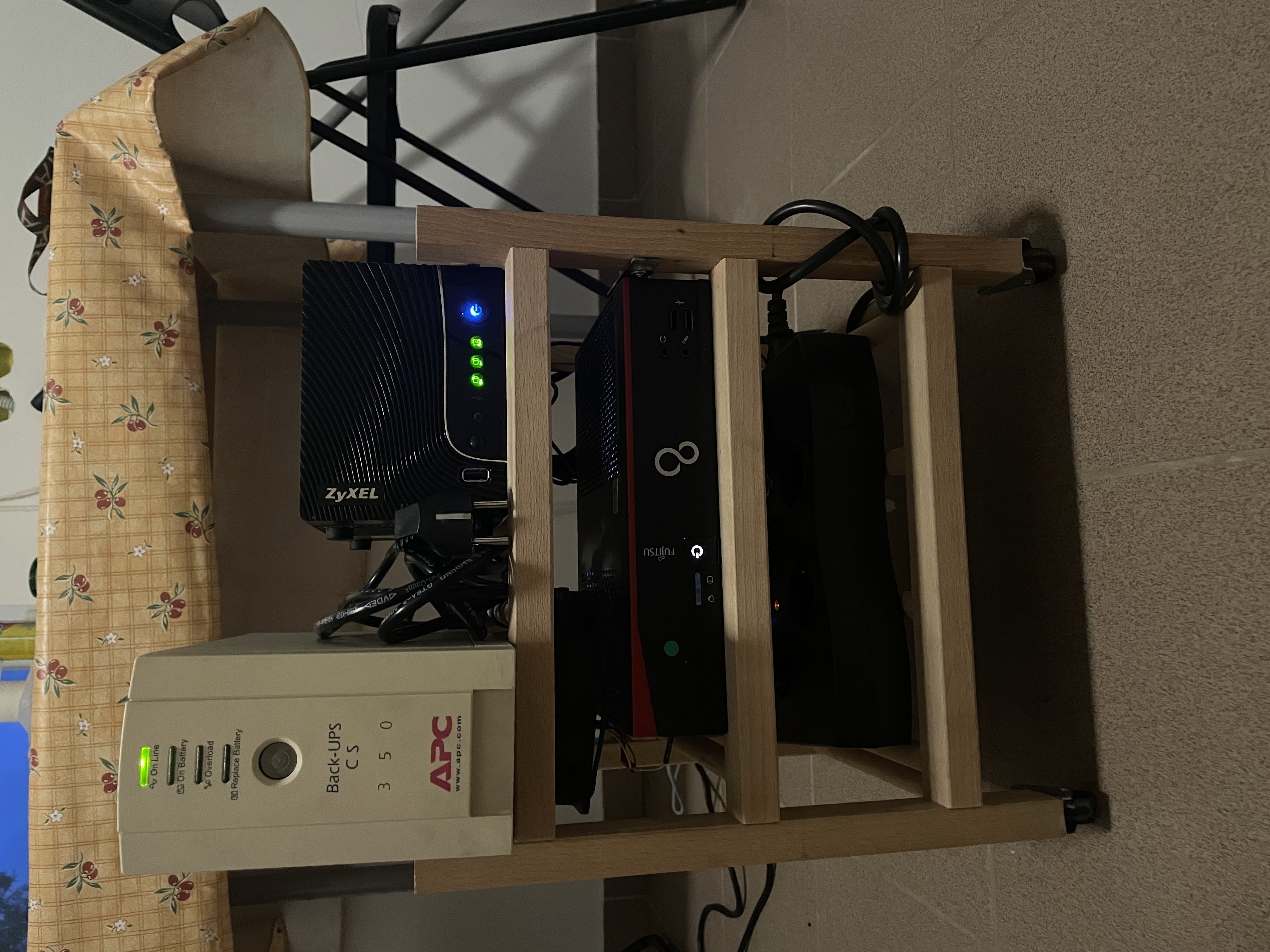
Of course, this list is constantly growing as I learn about new technologies and build on my existing knowledge.
Education
I have acquired most of my IT knowledge through self-study so far, but as a result of my primary and secondary school education, I have gained a strong command of German and English (I also hold two C1-level language certificates [Telc]).
My schools:
- Zugló Hajós Alfréd Hungarian-German Bilingual Primary School (Budapest) (2013–2021) website
- This is where I began learning German, and I also gained a strong foundation in science and humanities subjects
- I was involved in the work of the student council (I was also president of the student council)
- Eötvös József Grammar School (Budapest) (2021–2026) website
- I was able to further develop my language skills and was also introduced (within the classroom setting) to the English language
- I took part in the work of the student council and in organising certain events (e.g. Eötvös Days)
- I was first able to apply my IT skills to the organisation and running of the YRoNS conference: the “YRoNS app” used at the conference had numerous functions: as well as electronic identification and the ability to request assistance, participants could also take part in a city-wide scavenger hunt across Budapest, which we coordinated using a web application we developed ourselves
- I was also able to put another hobby of mine – one that had previously taken a back seat – to good use: under my leadership, the school’s photography team (Eötvös Média) documented dozens of events throughout the school year. Our work resulted in more than 20,000 photographs, which pupils and parents were delighted to browse through in the photo gallery.
- I took part in the National Science and Innovation Olympiad, where I used LoRa radio modulation technology – which was still in its infancy at the time – to develop an innovative, energy-efficient irrigation solution. I won a special prize for my project.
- TU Wien (Vienna) (2026-) website
- I’m currently studying here, and I’ll be posting the major events here…
Based on all this, I believe that it is possible to deliver high-quality IT on a budget, but the specific solutions – along with the technologies themselves – are constantly changing. And this is precisely the role of a good IT professional: to keep pace with this ever-changing professional world.